Note 04 / architectural record
Arabic inscriptions in Cairo: read the setting
An inscription on a mosque, gate or fountain is both language and architecture. Its height, material and later repair shape the way it can be seen.
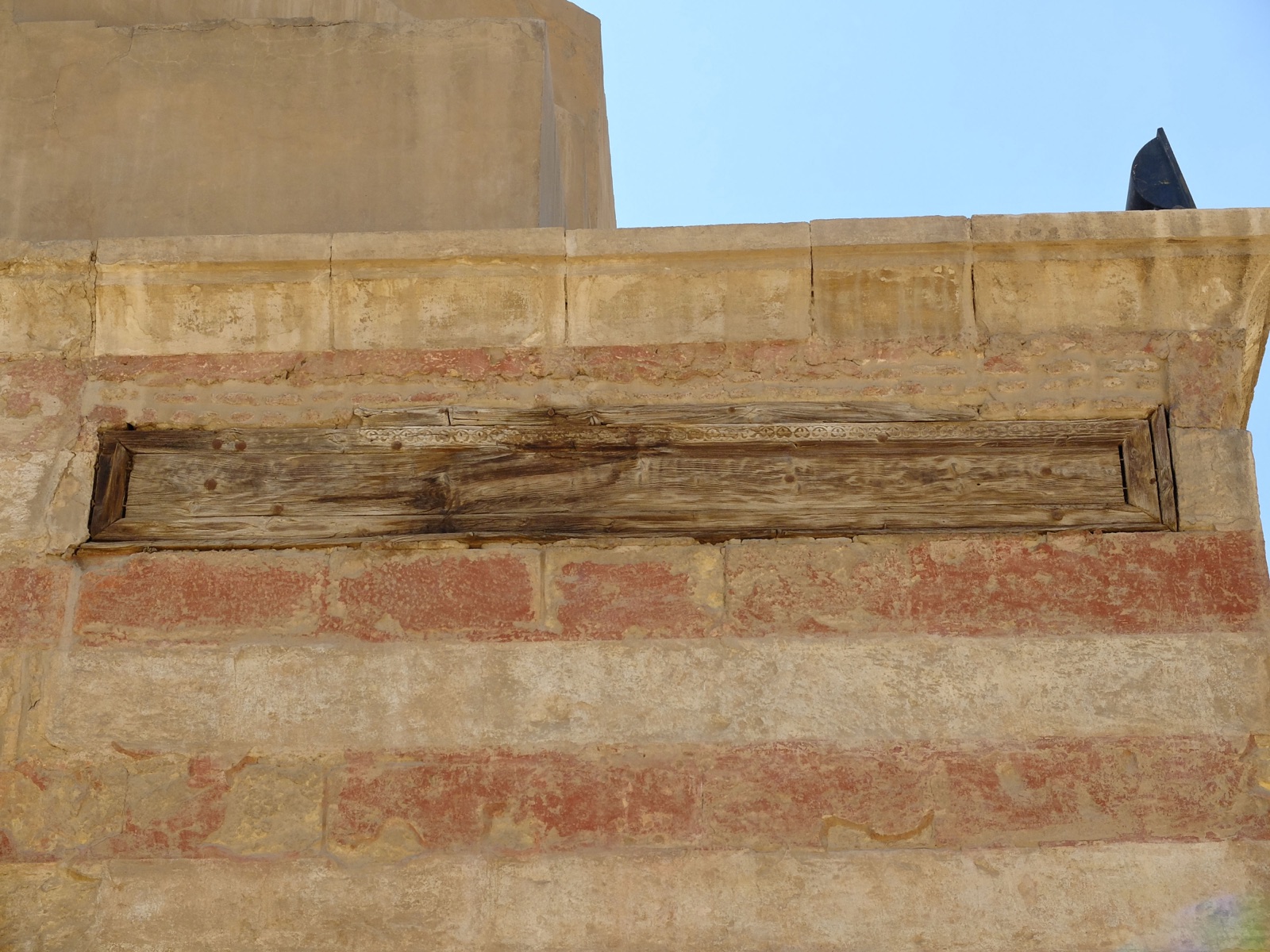
The source description identifies a faded Arabic inscription on a wooden panel at the fountain dome in Cairo’s Mosque of Ibn Tulun. It also states that the text records construction of the fountain by Sultan Lajin in 1296. Those historical claims come from the image record, not from the photograph alone. The photograph contributes other evidence: painted strokes, weathered wood, a framed horizontal band and a location within a larger architectural element.
Begin with the building component
Write the building name, then narrow the location: entrance, courtyard, minaret, mihrab, dome, fountain, door leaf or movable object. An inscription placed high on a façade addresses a viewer differently from a panel inside a prayer hall. Placement can relate text to patronage, foundation, restoration, devotion or ornament, but that function should be confirmed by an authoritative description rather than inferred from height alone.
Material shapes the letter
Arabic inscriptions in Cairo appear in carved stone, stucco, wood, metal, ceramic and painted surfaces, among other media. A chisel, mould, brush or inlay creates different edges and rhythms. Identify the material only when the source or close observation supports it. Dark paint on wood may fade into grain; carved stone may lose thin strokes at a broken edge. Surface behaviour is not a reliable substitute for dating.
Architecture sequence
Building → component → panel boundary → material → line direction → visible condition → official translation or publication. Keep the architectural frame in at least one photograph.
Script labels need expertise
Terms such as Kufic, naskh and thuluth describe important calligraphic traditions, but popular guides often use them too loosely. Letter proportions, ligatures, medium, period and regional practice all matter. Avoid dating a panel because it appears “Kufic-looking” or calling any angular inscription Kufic. If a conservation report or scholarly catalogue names the script, cite that source; otherwise describe what is visible: angularity, flowing curves, stacked letters or extended verticals.
Translation is more than recognition
A visitor who reads modern Arabic may recognise letters or familiar religious phrases, yet historic orthography, damaged text, calligraphic compression and formulaic language can complicate the reading. Do not fill losses from expectation. A foundation inscription may include titles, dates and patronage formulas whose exact wording matters. Use a published transcription and translation when making historical claims, and preserve brackets or uncertainties used by the editor.
The Mosque of Ibn Tulun has layers
The mosque is a major historic monument, while the fountain structure and its inscription belong to particular episodes within its longer history. The source links this panel to Sultan Lajin’s work in 1296. That does not date every nearby surface to the same moment. Photograph the component boundaries and look for official interpretation that separates initial construction, later repair and modern conservation.
Fading is part of the current record
The panel in the photograph is visibly worn. Increasing saturation may make some strokes appear stronger but can also turn wood grain and stains into invented letters. Retain a natural image and note that the inscription is faded. Conservation specialists decide whether pigment remains, which layers are original and how the panel should be stabilised. Visitors should never wet, rub or touch a surface to improve legibility.
Respect a living religious space
A mosque is not only an art-historical site. Dress, movement, photography and access should follow posted rules and the guidance of those caring for the space. Avoid blocking worshippers, photographing people without consent or using flash where it is prohibited. If a section is closed, use published documentation rather than leaning across barriers. Responsible observation keeps architecture connected to its current community.
Compare wide and close frames
Make one image that shows the inscription within the fountain or wall, a second that shows the whole panel, and a third readable detail if permitted. Record the viewing direction and whether artificial or natural light affected colour. A tight image alone can make wood appear like stone and a band appear like a loose object; the wide frame corrects those errors.
Caption source and observation separately
First state what the source provides: place, component, attribution and date. Then state what the image shows: a faded painted band on framed wooden panels. This two-part caption makes the boundary of evidence visible. It also leaves room for a future official publication to refine the interpretation without making the photograph itself misleading.