.jpg)

Separate what is visible from what a label identifies.
“Incised vertical columns” is an observation. Language, date and reading require evidence.
An Egyptian reading fieldbook
A wall, sherd, page or wooden panel carries more than words. Start with direction, material and place—then follow the object record instead of guessing a translation.
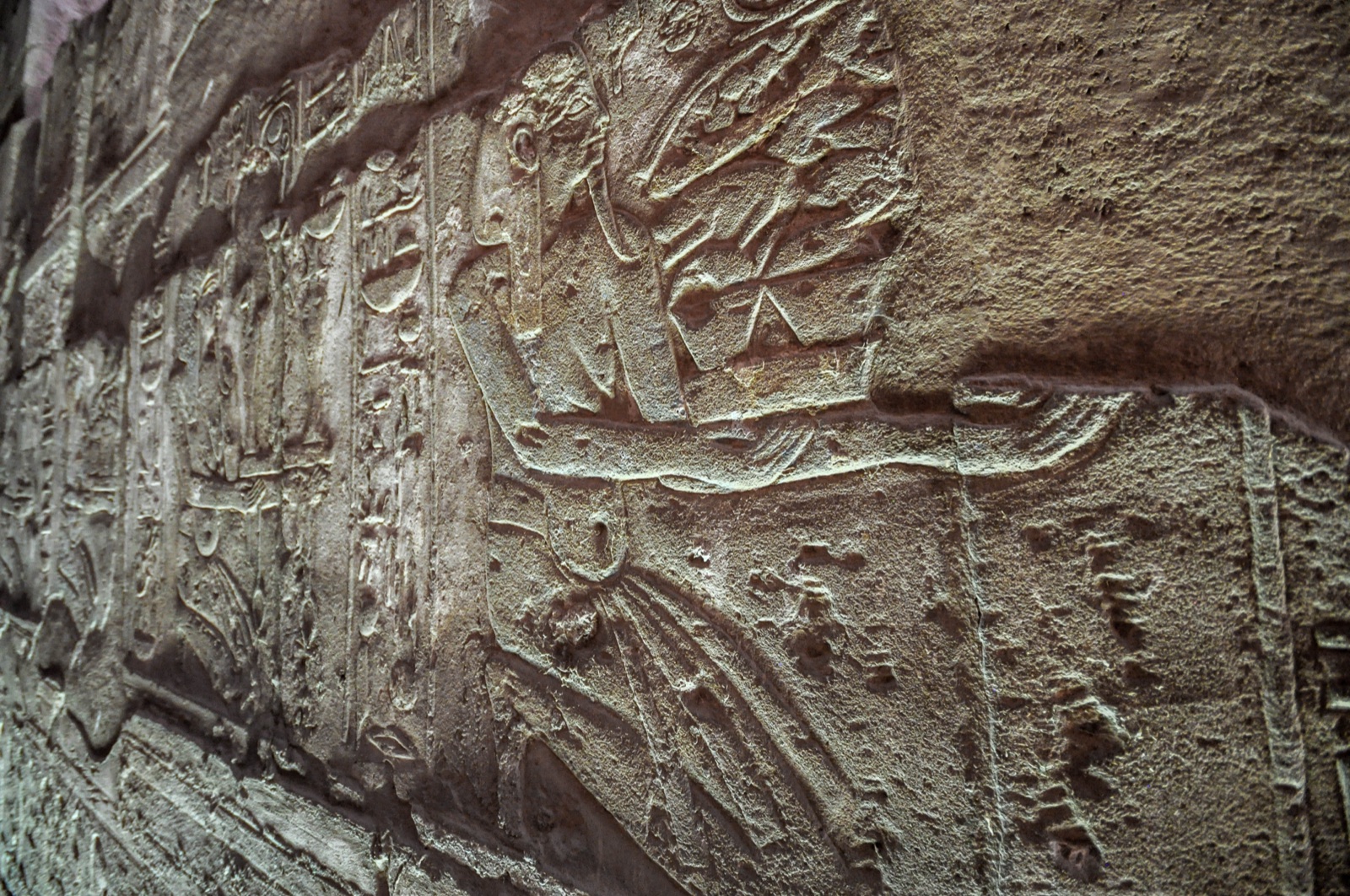
Hieroglyphs at Luxor Temple. Photo: Jorge Láscar / Wikimedia Commons, CC BY 2.0.
Four reading scales
Egyptian written culture does not collapse into a single alphabet or period. These notes move from monumental carving to quick ink, bound pages and architectural Arabic—without treating visual resemblance as evidence.
Find the direction, register and scene boundary before isolating a sign.
02 / OBJECTSee the limestone flake or pottery sherd before calling the marks hieroglyphs.
03 / PAGEUse layout, binding and collection data to approach a manuscript responsibly.
04 / SETTINGTrace an inscription through its doorway, dome, panel and restoration history.
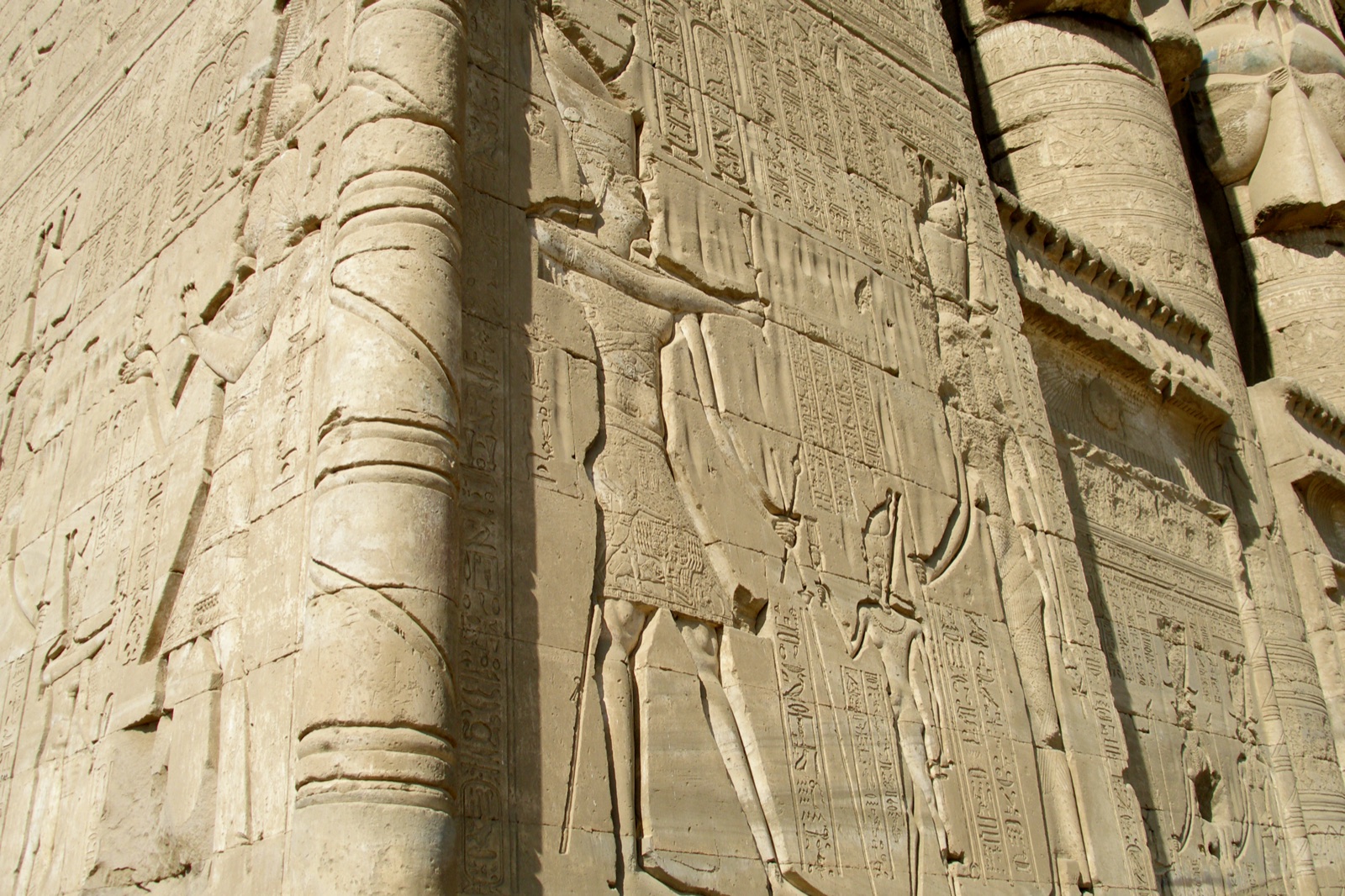
The three-frame method
A close-up may preserve signs while deleting the evidence that makes them legible. Build a short sequence instead.
Editorial rules
The notes help a visitor ask better questions. They do not replace epigraphy, palaeography, conservation records or the expertise of the people responsible for a monument or collection.
“Incised vertical columns” is an observation. Language, date and reading require evidence.
Damage, glare and restoration can interrupt writing. Mark the gap rather than inventing continuity.
Collection databases can clarify material, provenance, date and scholarly bibliography after the visit.
Start on site
It is the simplest way to keep a mark connected to the surface that carries it.