Note 02 / portable writing
Ostraca: read the object before the ink
A fragment used for writing is not a miniature temple wall. Its material, broken edge and reverse may be as informative as the visible lines.
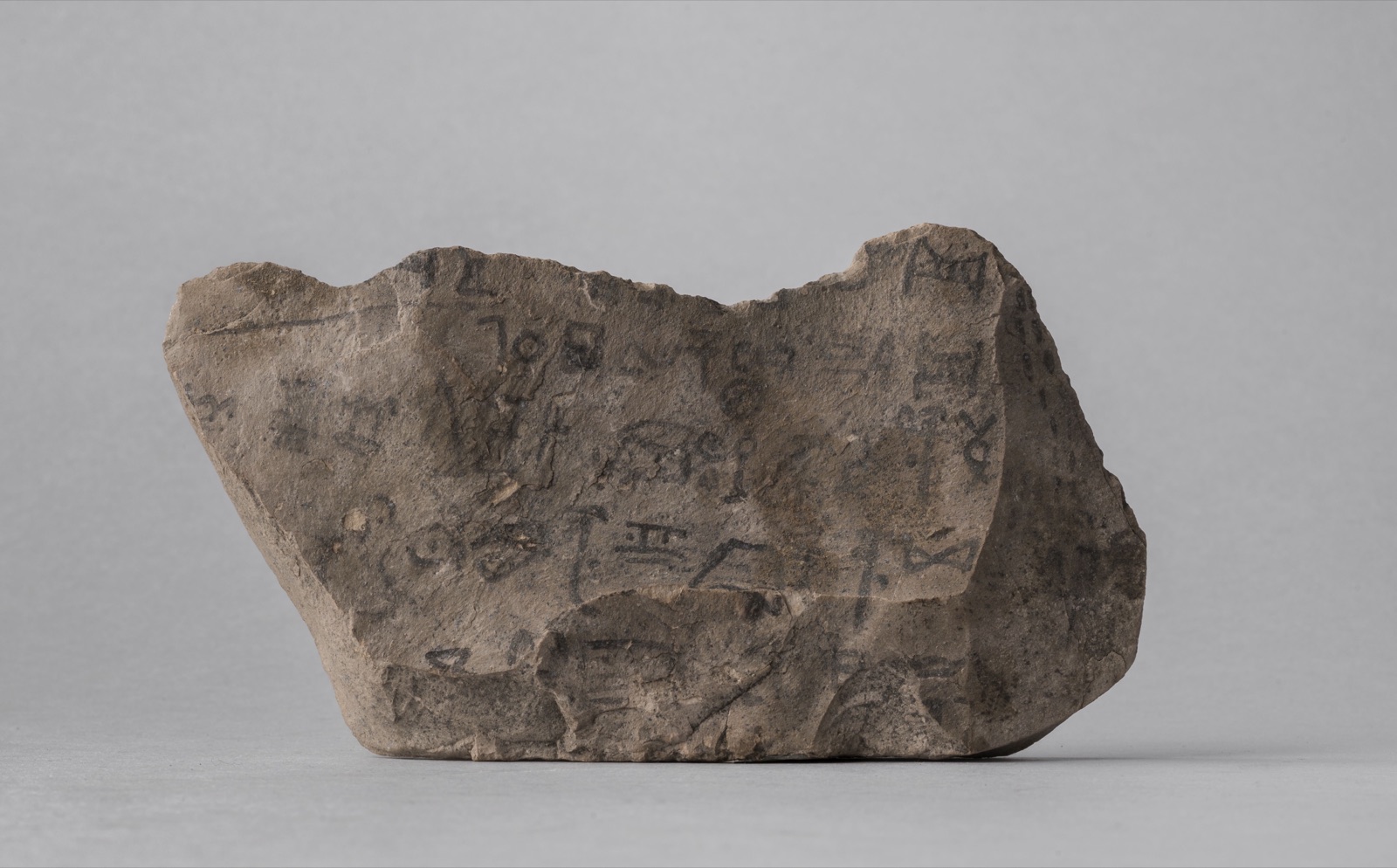
The source record identifies the photographed object as a limestone ostracon with an inventory in hieratic, held by the Museo Egizio under number C 2169. That compact description already separates several categories: the physical support is limestone, the script is hieratic, the text is identified as an inventory, and the current collection provides a searchable number. Keep those categories distinct. None can be established simply because the ink looks quick or the surface looks ancient.
Ostracon names a reused surface
An ostracon—plural ostraca—is commonly a pottery sherd or a flake of limestone used as a writing or drawing surface. The word describes the support, not one language, script or genre. Egyptian ostraca preserve administrative notes, letters, accounts, exercises, literary texts and drawings, among other material. A rough edge is therefore not incidental background: it helps define the available writing field and may show whether the piece is complete or part of a larger surface.
Hieratic is not careless hieroglyphs
Hieratic is a cursive script used for writing Egyptian, historically related to hieroglyphic writing but adapted to pen and ink. Its signs can be joined, abbreviated and shaped by the movement of the hand. Calling it “messy hieroglyphs” turns a writing system into a failed version of monumental carving. Record the script exactly as the collection labels it, and resist identifying individual signs from a decorative hieroglyph chart.
Object sequence
Support → dimensions → side → line direction → ink colour → edges → collection number → catalogue interpretation. A photograph rarely answers every point, so mark what comes from the label.
The line follows a physical field
Look at margins, changes of angle and the way lines stop near an edge. A writer may have adapted the text to an irregular flake, or an edge may have broken after writing. Do not assume which came first without a specialist assessment. Note whether characters continue toward a loss, whether the lower lines compress, and whether the surface texture diverts the strokes. These are observations about layout, not a reconstruction of missing words.
Front and reverse belong together
Museum displays and online thumbnails often favour one side. The reverse can carry more writing, a drawing, old collection marks or no text at all. Search the catalogue for additional views using the inventory number. If only the front is available, say “front as identified by the source” rather than “the entire text.” A filename ending in a front-view marker is useful evidence, but the object record remains the authority.
Ink, stain and digital contrast differ
Dark marks may include writing, surface discolouration, handling history, conservation notes or shadows cast by uneven stone. Follow repeated stroke behaviour across several lines before classifying a mark as ink. High-contrast editing can make faint writing visible, but it can also merge stains with characters and thicken strokes. Preserve the original image, work on a copy, and describe major processing beside any published detail.
Everyday does not mean trivial
Ostraca are often discussed as inexpensive or informal writing surfaces, yet their texts can carry complex administrative, literary and social information. “Everyday” is a scale of practice, not a judgement of value or literacy. Avoid romantic captions about a named worker’s feelings unless a published translation and secure identification support them. The responsible caption begins with the museum’s object title and adds only the observation the image can bear.
Provenance needs exact wording
A label may distinguish findspot, place of manufacture, former collection and current museum. Those are not interchangeable forms of “from.” Copy the term used and preserve question marks or broad date ranges. An object associated with a famous settlement should not automatically be assigned to a particular house, writer or event. If the catalogue does not provide archaeological context, acknowledge that limit.
Use the number as your way back
For this object, C 2169 is more useful than a visual nickname. A collection number can connect the photograph to measurements, bibliography, translations and other views even when gallery displays change. Record the museum, number, visible side and the exact title supplied by the institution. That small discipline lets a portable fragment keep its own identity rather than becoming a generic example of “ancient handwriting.”