Note 03 / manuscript field
How to observe a Coptic manuscript page
A manuscript is a sequence of leaves, gatherings and decisions. One open page should be read as part of that built object, not as a flat pattern of letters.
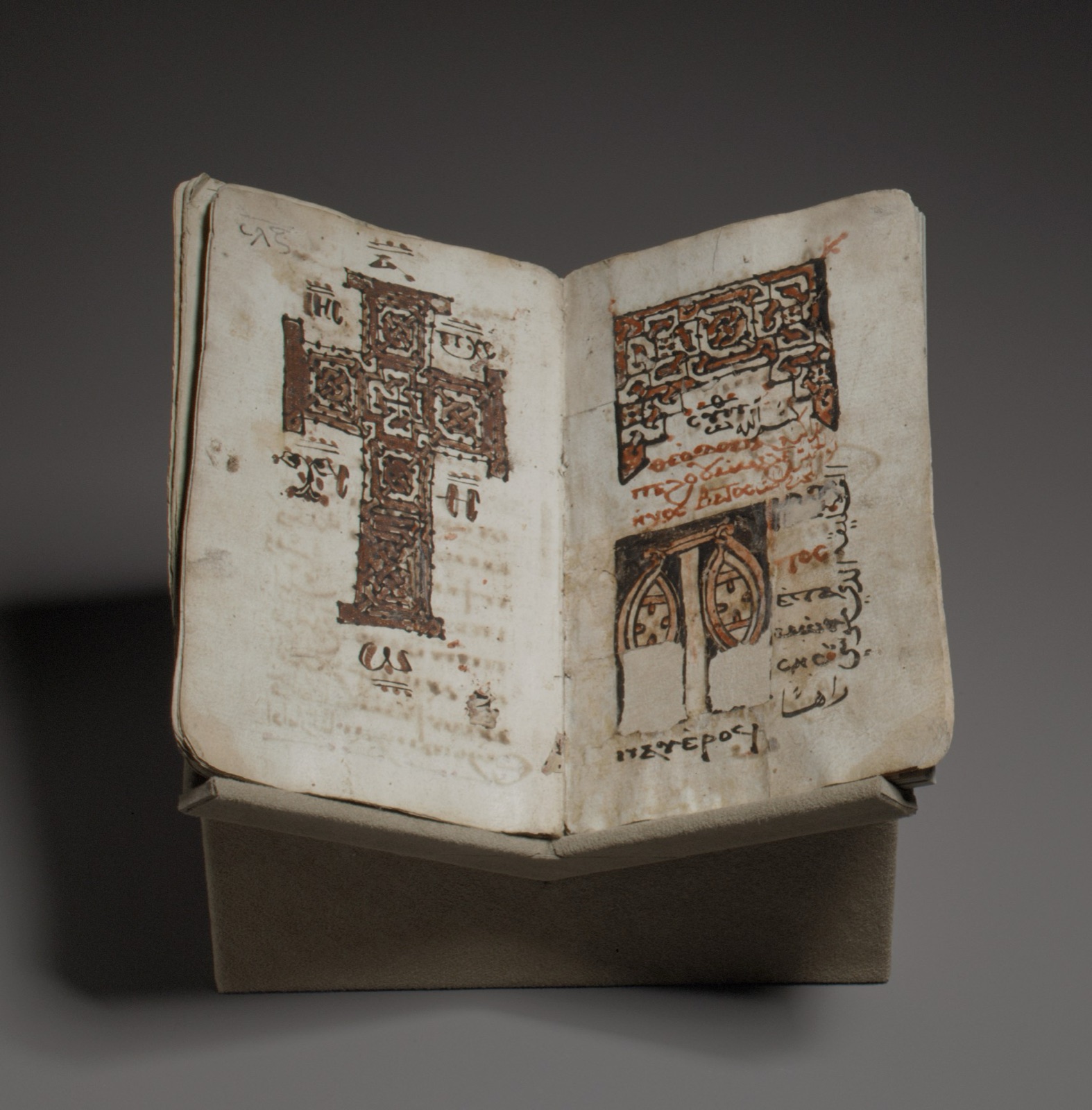
The source identifies the pictured object as a Coptic liturgical codex from the collection of The Metropolitan Museum of Art. That wording gives a responsible starting point: language and liturgical context come from the collection, while the image lets us observe an opening with text, margins, decoration, wear and binding structure. Avoid adding a monastery, date, dialect or named scribe unless the full object record supplies those details.
Coptic names a language and writing tradition
Coptic represents the latest historical stage of the Egyptian language. Its alphabet is based largely on Greek letters and includes additional characters derived from Demotic to represent Egyptian sounds not covered by Greek. That concise description is not a licence to sound out an unfamiliar page from visual resemblance. Coptic manuscripts may use different dialects, scribal conventions and abbreviations; identification and translation depend on expertise and an appropriate edition.
Begin with the opening, not one letter
Record whether the image shows one leaf, two facing pages or a detached fragment. Note columns, margins, line count, decorated zones and any interruption at the gutter. A page opening is designed across an area: text may pause around an image, headings may change colour, and marks near the inner edge may disappear into the binding. Those relationships are lost when a single letter is cropped for comparison.
Page map
Outer edge → upper margin → text block → decoration → gutter → lower margin. Add the collection number and page or folio reference if the catalogue provides them.
The codex is a constructed object
A codex consists of leaves gathered and bound, not simply individual images in sequence. Binding holes, folds, sewing, page edges and the order of gatherings can preserve evidence about manufacture and later repair. A digital photograph may show only the current arrangement. Do not infer that every visible attachment is original or that the present opening has always faced the same page; consult conservation and catalogue records where structure matters.
Layout helps separate functions
Changes in scale, colour, spacing or alignment can distinguish body text, headings, punctuation, ornament and images. Describe the change without assigning a function you cannot verify: “a larger red line above the main black text” is safer than “the chapter title” when no catalogue or edition confirms it. Repetition across several digitised pages can reveal a pattern, but a pattern still needs scholarly interpretation.
Decoration belongs to the reading field
Illustrated figures, frames and colour are not detachable decoration added to make a page attractive. Their position can structure attention and relate to liturgical use, narrative or devotion. At the same time, visual style alone should not be used to name a workshop, community or date. Compare the museum’s description and bibliography rather than searching for a single similar face or border online.
Condition changes what the camera shows
Darkened edges, missing corners, holes, stains and faded ink can interrupt both image and text. Even lighting is useful for reading the page, while strong digital whitening can erase parchment or paper texture and turn loss into an apparently clean margin. Keep tonal variation and do not digitally complete letters across a tear. Conservation treatment and imaging history may also affect the current appearance.
A language is not a vanished people
Coptic is also a living liturgical language within Coptic Christian communities. A historic manuscript should not be presented as evidence that Coptic culture exists only in the museum. Respect worship settings, current communities and institutional rules. If a codex remains in a monastery or church collection, access and photography may follow religious as well as conservation requirements.
Follow identifiers through the catalogue
The most reliable path from image to knowledge is the collection record: object title, accession number, material, dimensions, date range, provenance, bibliography and available page views. Copy these fields separately. “Coptic,” “liturgical,” and “codex” answer different questions, and none should silently replace the others. When a translation is available, cite the edition or institution that supplies it.
Write a modest caption
A sound caption names the codex as the source does, identifies the visible opening, describes layout and condition, and credits the image. It does not invent the pictured episode, a precise date or a scribe’s identity. This restraint is not a failure to read. It keeps the manuscript connected to the people and records capable of supporting a fuller reading later.